The full file
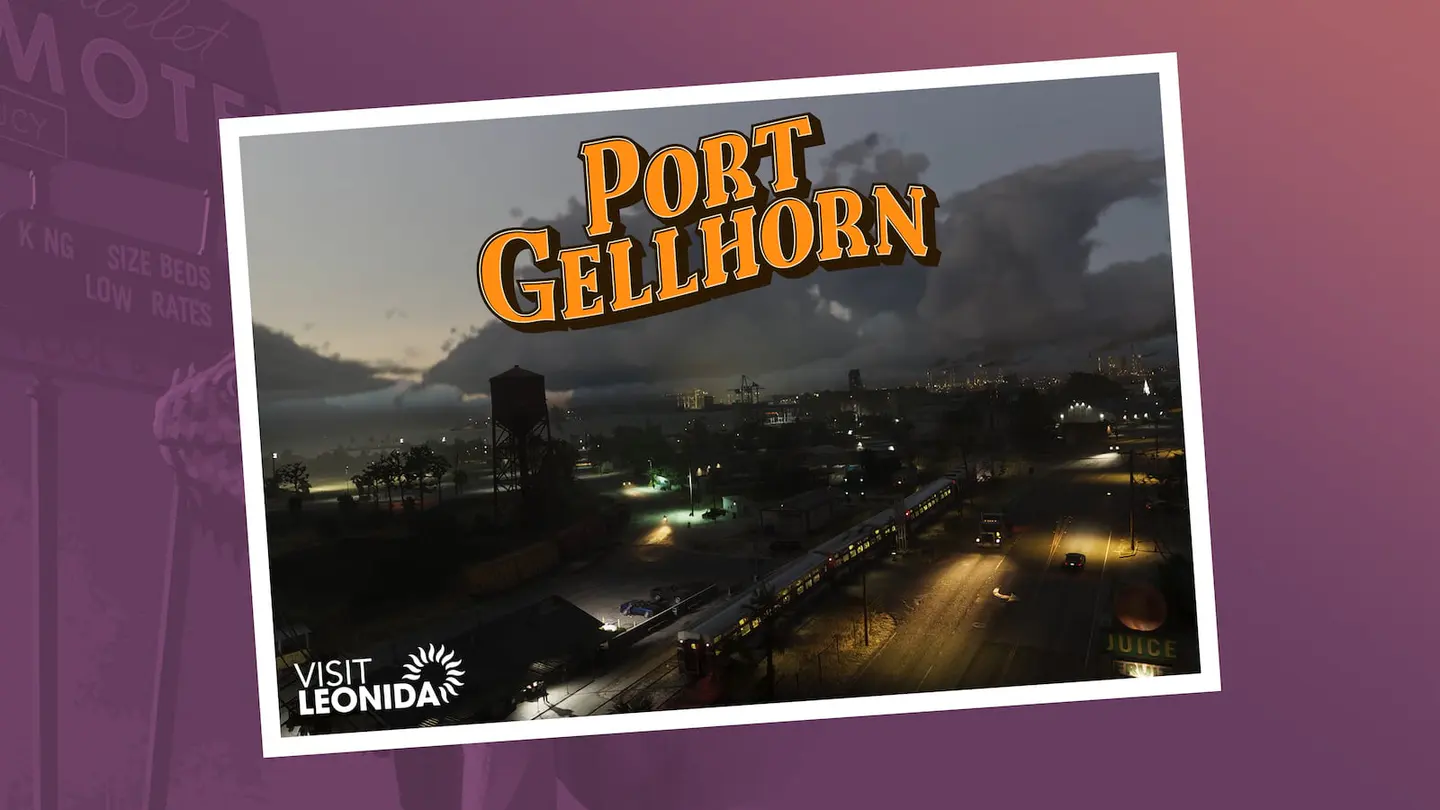
Port Gellhorn is the clearest reminder that Leonida is not designed as one continuous postcard. Rockstar presents it as a worn coastal city where old motels, faded commercial strips, ports and working-class streets carry a different visual history from Vice City. That contrast gives the state another urban rhythm: less polished, less performative and potentially more useful for showing what life looks like when the tourist shine wears off.
An official city, not a fan-map invention
Rockstar names Port Gellhorn directly in its GTA VI location material. That matters because community reconstructions can place roads and landmarks with impressive accuracy, but the existence and identity of this city do not depend on a leak or a speculative label. Its role in the final street map is still incomplete; its status as a major Leonida location is not.
The visual language is built around decline
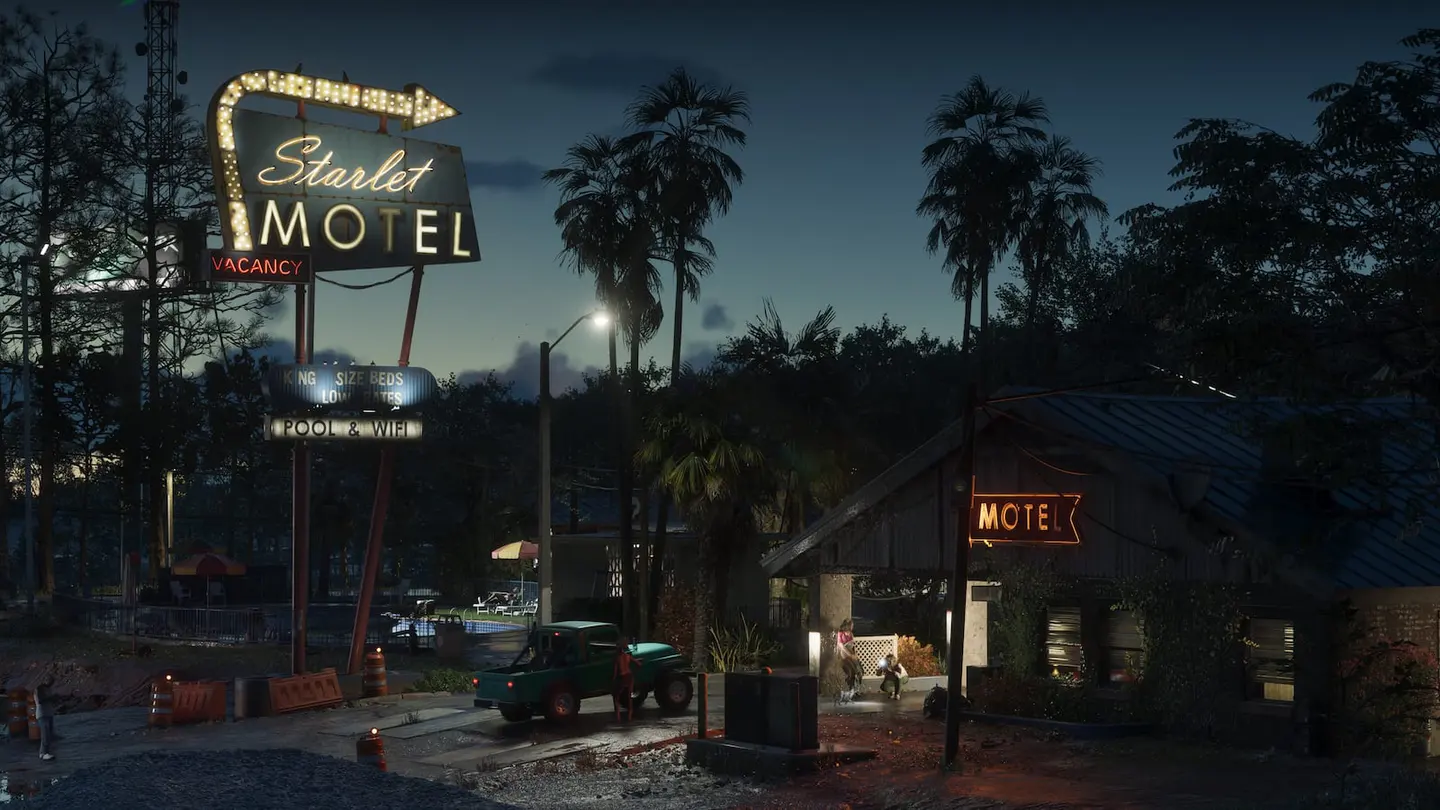
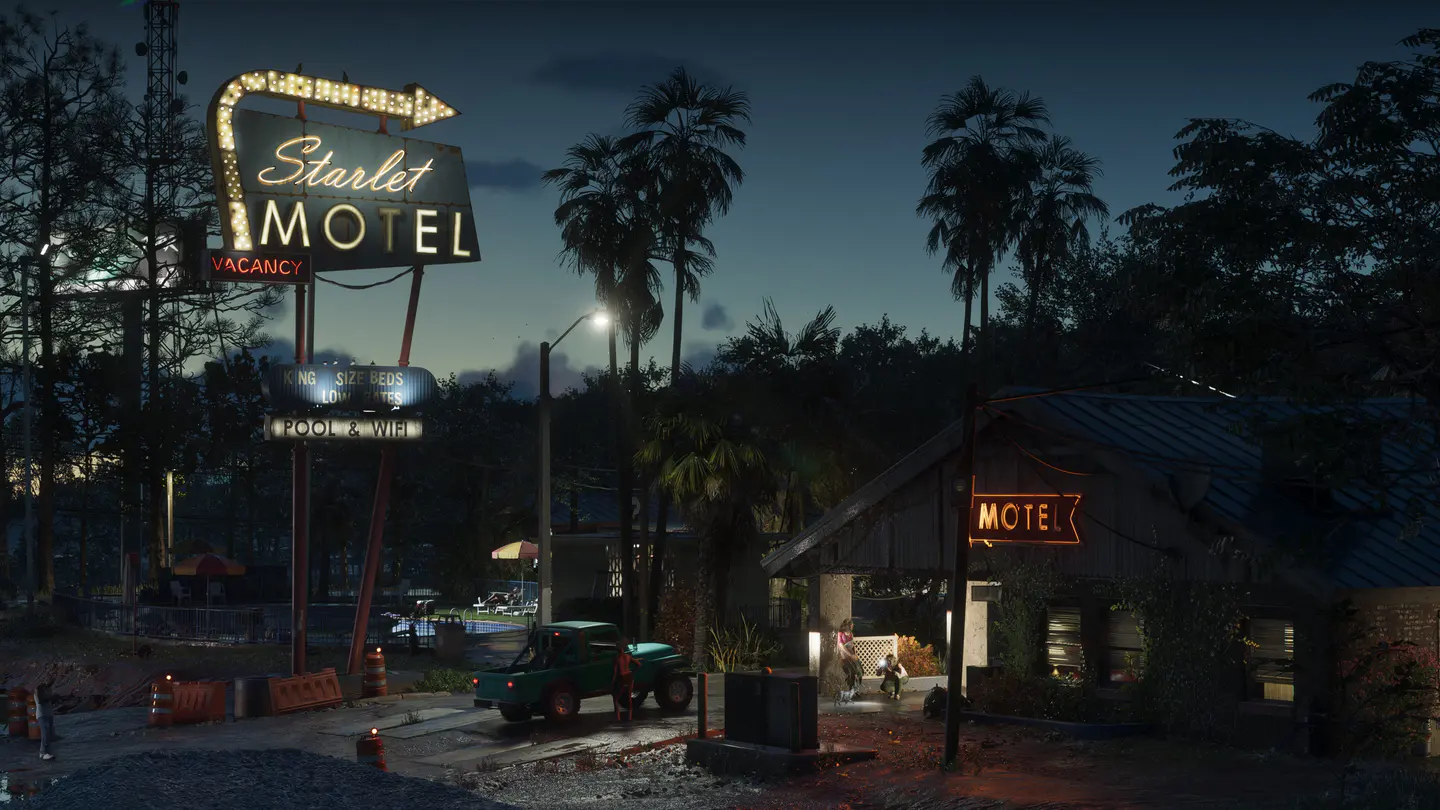
Where Vice City sells vertical glass, bright nightlife and beach wealth, Port Gellhorn leans into older roadside architecture, weathered signs and places that look like they have survived several versions of the local economy. The result is not simply a poorer version of Vice City. It is a location with a separate sense of time — a place where the past remains visible in the buildings.
Why that contrast matters for an open world
Large maps become forgettable when every district solves the same visual problem. Port Gellhorn gives Rockstar a way to change the emotional temperature without leaving urban space. A police chase through a tourist boulevard should feel different from one through narrow commercial roads, old motels and industrial edges. Variety in road width, traffic, lighting and density can matter more than raw square mileage.

The coast can connect travel, work and crime
The name and official imagery place the city inside Leonida’s wider coastal identity. Ports, marinas and working waterfronts are natural meeting points between legal business and criminal logistics, but Rockstar has not yet published a system list for smuggling, cargo or port ownership here. The geography supports those story possibilities; it does not confirm a mechanic.
What we can read from official material
The safe conclusions are visual and geographic: Port Gellhorn is a named Leonida city, it has a rougher and more weathered identity than Vice City, and Rockstar wants it to feel like a meaningful destination rather than a background label. Exact district boundaries, population, accessible interiors and mission count remain unreleased.
What we should not import from community maps
Fan mapping can help connect road shapes and landmarks, but an approximate placement is not the same thing as a final Rockstar boundary. Development can move roads, compress distance and hide inaccessible space. This file therefore uses community reconstruction as a question generator, not as the authority for exact size or street names.
The gameplay question is density
Port Gellhorn will become important if the city has its own routines: different traffic, businesses, pedestrians, police behavior and reasons to stop rather than simply drive through. A named location earns its weight when the player can recognize how the world behaves differently there. That is the evidence to look for in sustained gameplay and, eventually, the release build.
Story potential without invented missions
A rougher coastal city naturally fits criminal stories, but no specific robbery, safehouse, faction or character arc should be assigned to Port Gellhorn until Rockstar publishes it. The useful pre-release position is narrower: the setting gives the writers and mission designers a different social environment to use, and that difference is already visible before we know the script.

What Port Gellhorn changes about Leonida’s scale
Port Gellhorn is an officially confirmed GTA VI city with a distinct worn coastal identity that expands Leonida beyond Vice City’s glamour. Rockstar has established the place and its tone. The exact boundaries, interiors, businesses and mission structure remain open, which is why this file treats the city as confirmed geography rather than a finished gameplay checklist.
Sources reviewed
Primary material leads when it exists. Independent reporting and analysis are listed separately so you can inspect the evidence chain instead of trusting a single link.